AIVIS Unveils "Qanti® IHC Suite," a Biomarker Analysis Product Line for Multiple Cancer Types, at ASDP 2026
etnews
November 10, 2026
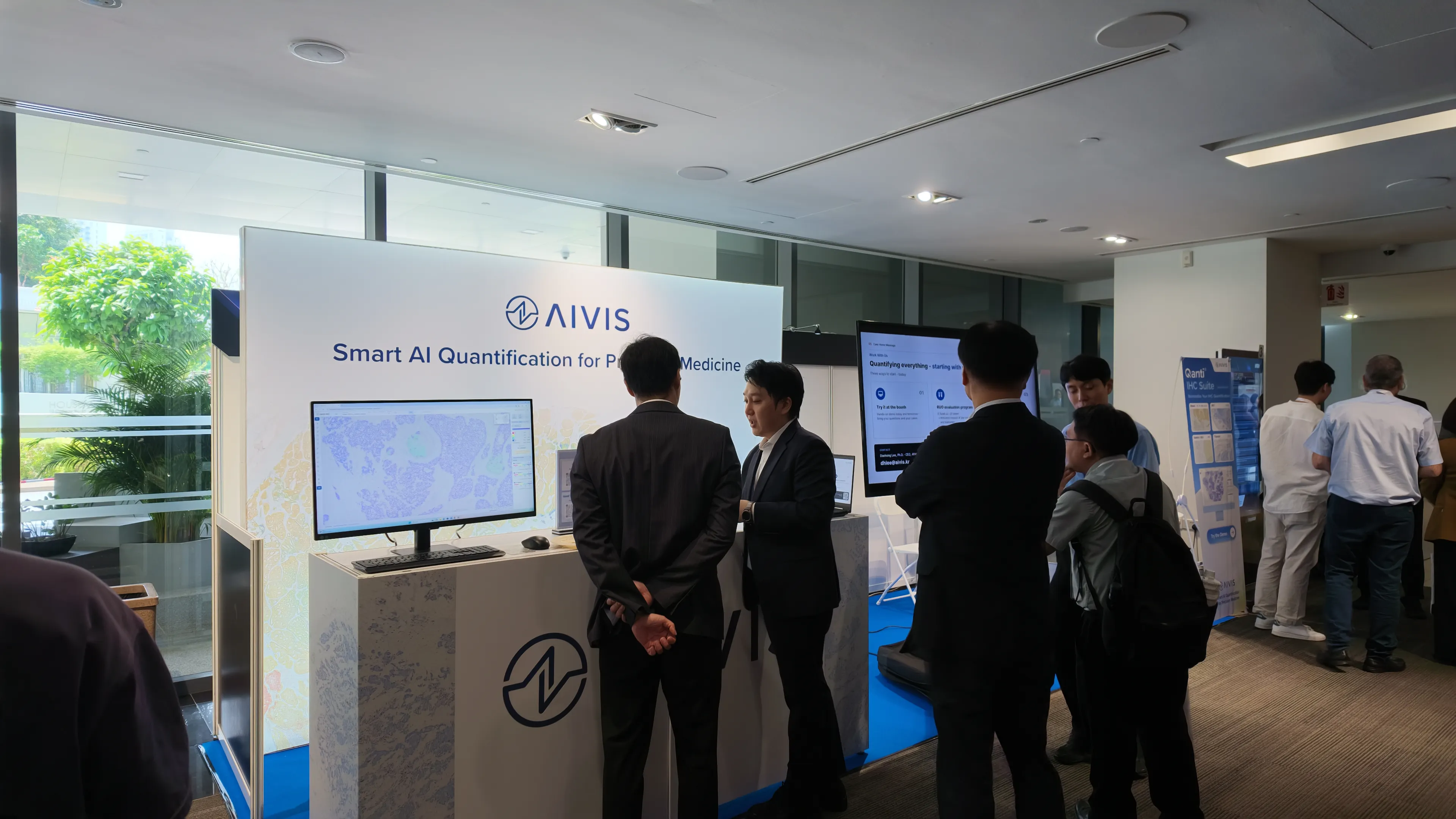
Showcasing breast cancer HER2 quantitative analysis technology | Expanding analysis to gastric cancer, thyroid tumors, and neuroendocrine tumors AIVIS (CEO Daehong Lee), a company specializing in AI-powered digital pathology biomarker analysis, announced that it participated in the 3rd Asian Society of Digital Pathology meeting (ASDP 2026), held in Singapore from November 1 to 3, where it presented Qanti® Breast HER2, its breast cancer HER2 analysis solution, and Qanti® IHC Suite, a biomarker analysis product line covering a range of cancer types. At the conference, AIVIS introduced the expanded Qanti IHC Suite product line and demonstrated its AI-based quantitative biomarker analysis technology on site. Qanti IHC Suite is a product line that provides analysis functions for each cancer type and biomarker, built on AI technology that detects cells in digital immunohistochemistry (IHC) images and quantifies biomarker expression. In addition to the existing ER, PR, HER2, and Ki-67 analyses for breast cancer, the suite includes Qanti Gastric/GEJ HER2, which analyzes HER2 expression in gastric and gastroesophageal junction (GEJ) cancer; Qanti Thyroid Ki-67, which analyzes the Ki-67 proliferation index in thyroid tumors; and Qanti NET Ki-67, which analyzes the Ki-67 proliferation index in neuroendocrine tumors. AIVIS is expanding the product line on a common technological foundation of cell-level detection and quantitative analysis, while reflecting the histological and biomarker analysis characteristics of each cancer type. Through this, the company plans to extend the technology and commercialization experience it has accumulated in breast cancer to a variety of cancer types and broaden the application of its biomarker analysis technology. Qanti Breast HER2, also introduced at the event, is software that uses AI to analyze HER2 IHC images of breast cancer tissue, detecting tumor cells and classifying the staining pattern of each cell to provide quantitative analysis results. It analyzes cell-level staining characteristics and distribution, including cases where HER2 expression is absent or faint, and provides quantitative data that can be used in HER2-low and HER2-ultralow research. AIVIS has been evaluating the potential of this technology through multicenter studies. At ESMO Asia 2025, the company presented the results of a HER2 interpretation study involving 38 pathologists from 20 institutions in Korea, which evaluated changes in interpretation agreement and accuracy before and after using AI analysis results. In the study, the Fleiss' kappa value, which indicates the level of agreement among pathologists, improved from 0.4492 to 0.7524. The company explained that the results demonstrate the potential of AI technology to help reduce inter-observer variability in HER2 assessment. Daehong Lee, CEO of AIVIS, said, "At ASDP 2026, we were able to present Qanti IHC Suite, which extends the quantitative biomarker analysis technology we have accumulated in breast cancer to a variety of cancer types." He added, "Building on our product supply and real-world validation experience at medical institutions in Korea, we will expand opportunities for collaboration with overseas medical institutions and related companies, and broaden the application of our biomarker analysis technology into precision medicine and drug development." AIVIS currently supplies its AI-based IHC quantitative analysis solution on a paid basis to 16 medical institutions in Korea, and is conducting multicenter real-world validation at five medical institutions in Korea through the 2026 Medical AI Testbed Support Program, led by the Ministry of Health and Welfare and the Korea Health Information Service. Based on this commercialization and validation experience, the company is pursuing business expansion targeting overseas medical institutions and pharmaceutical and biotech companies. Meanwhile, ASDP 2026 is an international academic conference in the field of digital pathology attended by pathologists, researchers, medical institutions, and medical device companies from across Asia. This year, it was held at the Academia within Singapore General Hospital (SGH).