AIVIS Publishes Multicenter Study on HER2 Interpretation AI in International Journal, Confirming Improved Interpretation Agreement and Accuracy
etnews
November 18, 2026
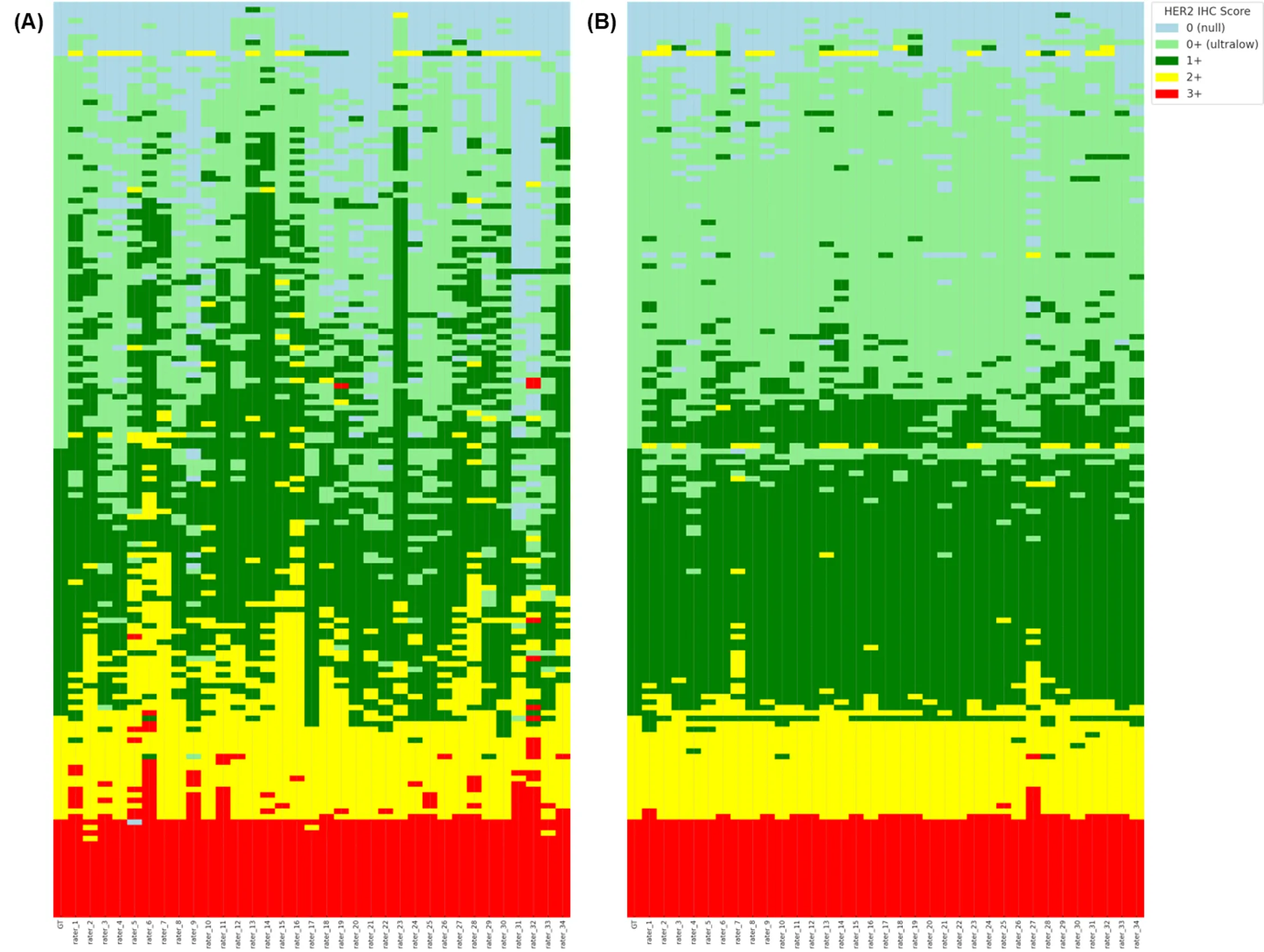
Nationwide multicenter study involving 38 specialists from the Korean Breast Pathology Study Group; inter-observer agreement κ improved from 0.45 to 0.75 with AI | Improved sensitivity in HER2-ultralow and 1+ categories; preparing a multicenter confirmatory clinical trial and pursuing regulatory approval AIVIS (CEO Daehong Lee), a company specializing in AI-powered digital pathology and precision biomarker analysis, announced that the results of a nationwide multicenter study validating the effect of artificial intelligence (AI) on breast cancer HER2 immunohistochemistry (IHC) interpretation have been published in the international journal Cancer Research and Treatment. The study was titled "A Nationwide Study of Interobserver Agreement and Accuracy in HER2 Immunohistochemistry and the Impact of Artificial Intelligence on HER2 Interpretation." Thirty-eight specialists from the Korean Breast Pathology Study Group participated. Among them, 34 breast pathologists interpreted 168 breast cancer cases without AI, and then, after a four-week interval, re-evaluated the same cases using AI, allowing the interpretation results before and after AI use to be compared. The results showed that inter-observer agreement improved significantly with AI. Fleiss' kappa increased from 0.4492 to 0.7524 (p<0.001), confirming the potential of AI to reduce differences between readers and contribute to more consistent evaluation in HER2 IHC interpretation. The improvement was particularly pronounced in the HER2-low range, which is becoming increasingly important as HER2-targeted therapies expand. Sensitivity for HER2-ultralow cases increased from 48.5% to 73.9%, and for HER2 IHC 1+ cases from 64.9% to 87.7% (p<0.001). In terms of interpretation time, AI use shortened reading time for HER2-ultralow cases by 3.12 seconds, a reduction of 5.1%. While the unadjusted analysis of all cases did not show a significant reduction in interpretation time, the study confirmed the potential for efficiency gains from AI in the challenging HER2-ultralow range. Distinguishing low levels of HER2 expression, including HER2-ultralow, is becoming more important as the range of patients eligible for HER2-targeted therapy expands. The study is significant in that it confirmed the potential of AI to improve the reproducibility and accuracy of interpretation in these subtle expression ranges in a real-world multicenter, multi-reader setting. Based on these results, AIVIS is preparing a multicenter confirmatory clinical trial of its HER2 analysis AI and plans to pursue medical device approval. Daehong Lee, CEO of AIVIS, said, "This study is highly meaningful in that many pathologists in a nationwide multicenter setting participated and directly compared the changes in HER2 interpretation before and after using AI." He added, "Building on the results confirmed in particularly challenging areas such as HER2-ultralow, we will conduct follow-up clinical studies and develop this into a technology that can be used in real-world clinical practice."